
QR vs NFC vs UHF RFID: How to Choose a DPP Data Carrier

Topic
Digital Product Passport, Traceability
Solutions
r-pac TRCE
Published
Loading date...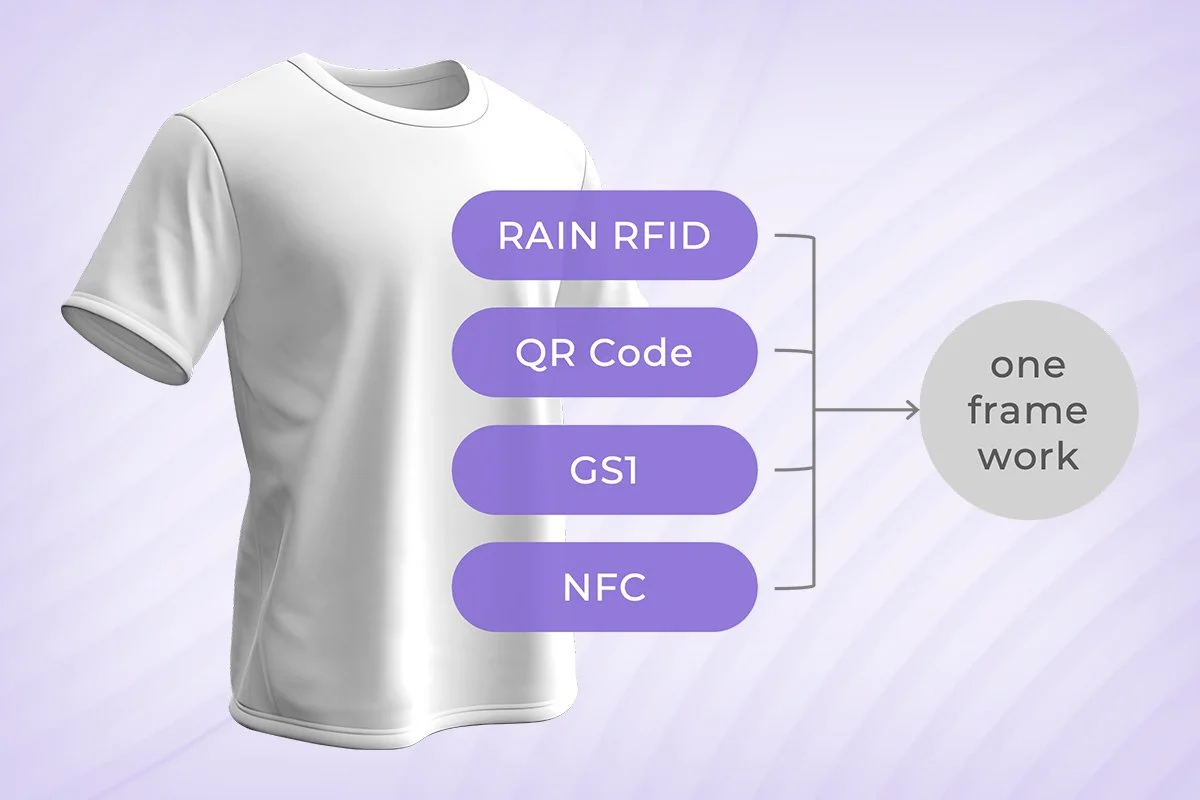
There is no single best data carrier for a Digital Product Passport. There is the right carrier for the job, and for most brands that means more than one. The good news is that this is a practical decision, not a bet.
One framework, several carriers
Because every option below can carry the same GS1 Digital Link, choosing a carrier is a practical decision about cost, durability, and use case, not a lock-in to a proprietary system. All of them resolve to the same product record.
QR code
The lowest-cost, most universal option. Every smartphone can scan it, and it is instant to deploy. The trade-offs are that it is optical, so it needs line of sight, and a printed code can wear, smudge, or be removed. Best for universal consumer access and a fast, low-cost rollout.
GS1 DataMatrix
A compact 2D barcode, standards-driven and Digital Link ready. It is reliable in very small spaces and strong in regulated supply chains, but it is still optical and line-of-sight. Best for small items and space-constrained labels.
NFC
The tap-to-read experience, activated by holding a phone close. It feels premium, supports cryptographic authentication, and needs no line of sight at close range. The trade-offs are a higher per-unit cost than QR, a very short range, and reading one item at a time. Best for premium engagement and product authentication.
RAIN RFID (UHF)
A passive inlay read by RFID readers, and increasingly by smartphones. It reads without line of sight, in bulk, at distance, with no battery, and it is durable enough to survive industrial laundering. Consumer smartphone reading is still emerging, and operational use needs reader infrastructure. Best for lifetime identity, supply-chain visibility, high-speed sorting, and inventory. It is now a recognized DPP carrier under EN 18220:2026.
Where the RAIN tag goes
If durability across the full product life is your priority, RAIN RFID is the strongest option. For textiles it comes in three form factors: sewn-in labels, laundry-rated labels engineered to survive hundreds of wash cycles, and embedded tags encapsulated in the textile itself, which are invisible and cannot be removed. That permanence is the point for products built to be repaired, resold, or recycled years later.
The practical answer is usually a hybrid
Most brands pair a consumer-facing carrier for reach with a durable carrier for lifetime identity. Because both hold the same Digital Link, they resolve to one record. A QR or NFC tap the customer uses today, plus a RAIN tag that lasts the life of the product and powers the supply chain, is a common and sensible combination.
Get the complete picture
Download the free 2026 Digital Product Passport Starter Kit, the full guide as one PDF, including the timeline, the carrier comparison, the maturity model, and a readiness checklist.