
Police Seized 4,400 Fake Shirts. Crackdowns Alone Won't Win the Counterfeit War

Topic
Counterfeit; Authenticity
Solutions
r-pac HYPE
Published
Loading date...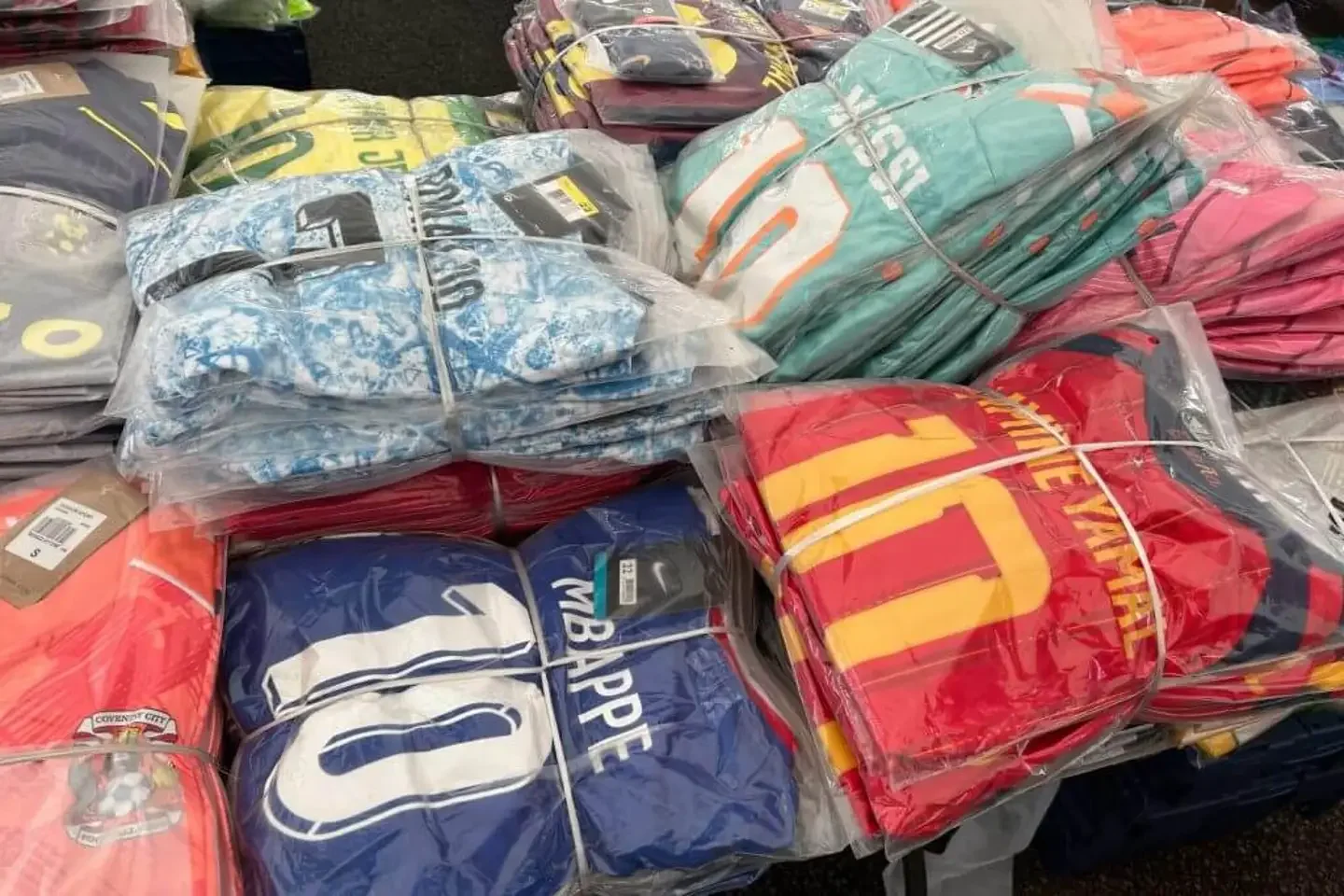
As the 2026 World Cup gets underway, counterfeit football shirts are flooding markets and marketplaces. Seizures help — but the real defense is building authentication into the product itself.
As the 2026 World Cup gets underway, counterfeit football shirts are flooding markets and marketplaces. Seizures help — but the real defense is building authentication into the product itself.
On a Saturday morning this spring, seven officers from the City of London Police's Intellectual Property Crime Unit walked into one of the UK's largest outdoor markets and seized more than 4,400 counterfeit football shirts — fakes of Argentina, France, Portugal and England among them — from a single stall that had been under surveillance for months. One man was arrested. It was the biggest haul yet in a new pre–World Cup enforcement push, code-named Operation Bloxwich, targeting illicit shirts sold online and in person ahead of this summer's tournament. (Source: The Athletic, April 2026.)
It was a good day for enforcement. It was also a reminder of how outmatched enforcement is.
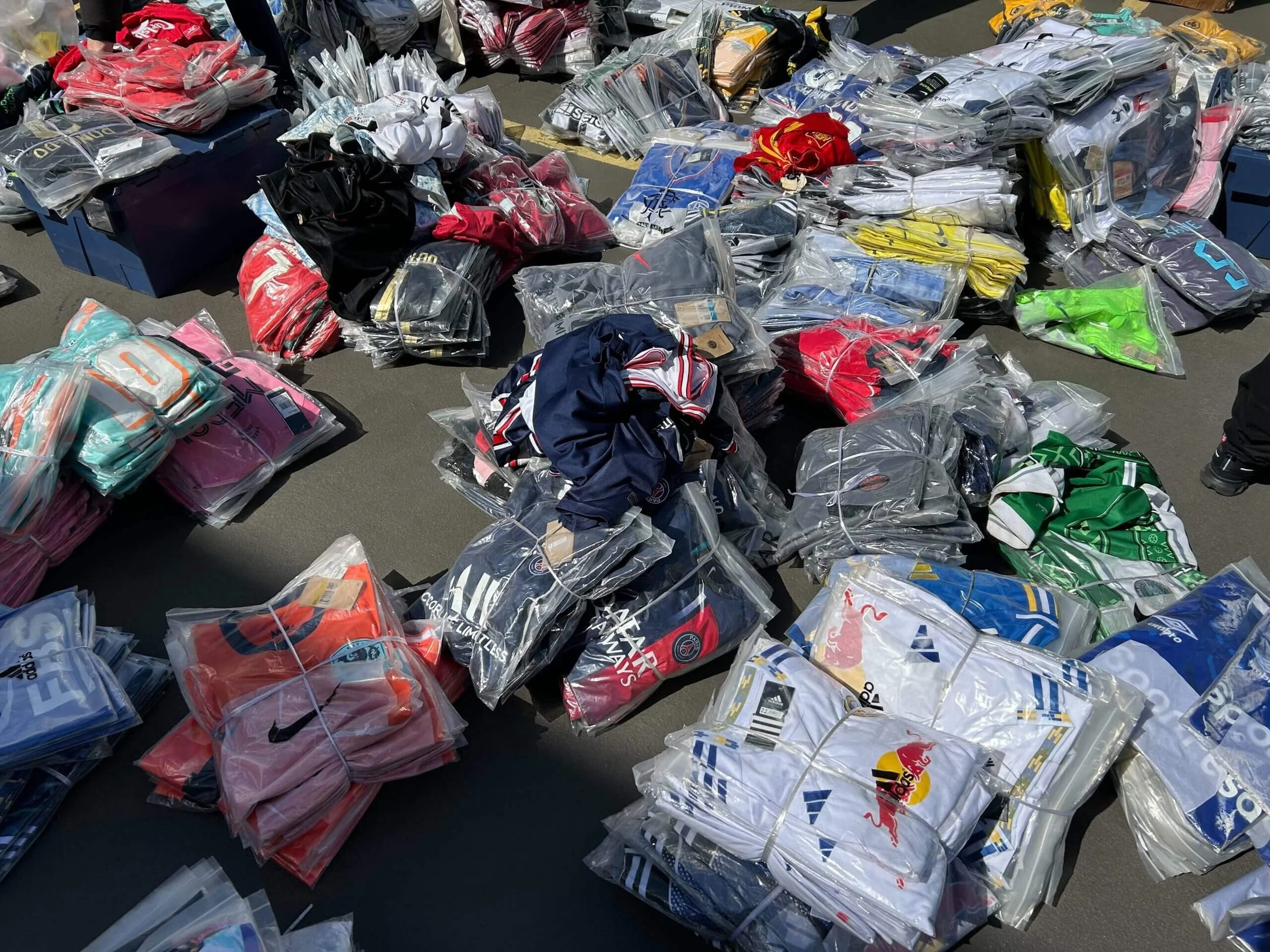
Seizures treat the symptom. They don't cure the disease.
4,400 shirts at one stall, on one morning, in one country. Multiply that across every market, pop-up and marketplace listing in the run-up to a World Cup now spanning the United States, Canada and Mexico — 48 teams, the largest field in the tournament's history, and a global audience to match — and the true scale of the problem comes into focus. For every counterfeit a task force intercepts, thousands more reach fans.
The cost isn't abstract. Counterfeit merchandise drains billions from clubs, leagues and kit partners every year, erodes brand integrity, and leaves fans wearing a product the rights holder never earned a cent on. And because enforcement is reactive — surveil, raid, seize, repeat — it will always be a step behind the people printing the fakes.
The question worth asking isn't "how do we catch more counterfeiters?" It's "how do we make the genuine article impossible to fake — and instantly provable as real?"
Every fake shirt is also a fan you'll never know
There's a second cost to counterfeiting that rarely gets discussed, and it may be bigger than the lost margin.
When a fan buys a fake, they don't just deprive the club of revenue — they become invisible. No name, no email, no purchase record, no way to bring them back. That's a problem clubs already face with legitimate sales: roughly three in four fans who buy official merchandise are completely unknown to the organizations they support. Disconnected ticketing, retail, social and sponsor data costs teams an estimated $1–5M a year in fan-data invisibility alone.
Counterfeiting takes that blind spot and makes it permanent. A fake shirt is a relationship that never starts.
“HYPE turns connected merchandise into a counterfeit defense and a fan channel at the same time. Using NFC, QR and RFID embedded directly into the shirt — in the hem, the neck tag, the sleeve badge — each item carries a unique, serialized digital identity. In a single tap, a fan can confirm their jersey is genuine. Counterfeits can’t replicate that secure digital signature, so the real product proves itself and the fake exposes itself. The result: 100% merchandise authentication from the moment a shirt leaves the line.”
Authentication built into the product itself
This is where the strategy has to shift — from chasing fakes after the fact to making every genuine product self-verifying from day one. That's what r-pac's HYPE does.
HYPE turns connected merchandise into a counterfeit defense and a fan channel at the same time. Using NFC, QR and RFID embedded directly into the shirt — in the hem, the neck tag, the sleeve badge — each item carries a unique, serialized digital identity. In a single tap, a fan can confirm their jersey is genuine. Counterfeits can't replicate that secure digital signature, so the real product proves itself and the fake exposes itself. The result: 100% merchandise authentication from the moment a shirt leaves the line.
For rights holders, that's protection that scales with production instead of depending on a task force getting a tip.
The same tag that stops fakes starts relationships
Here's the part that turns a cost center into a growth engine. The exact technology that authenticates a shirt also makes it a direct, owned channel to the fan wearing it. One embedded tag can:
Capture first-party data — name, email, preferences and behavior the club actually owns, closing the invisible-fan gap.
Unlock fan experiences — exclusive content, player messages, match-day perks, loyalty tiers and even stored value, all triggered by a tap.
Prove sponsor ROI — measurable, attributable fan interactions that finally make sponsorship the accountable channel it's never been.
Power compliance — Digital Product Passport readiness and sustainability credentials, increasingly required in key markets.
The commercial case is just as direct: first-party data drives a 2.9x revenue uplift, and connected fans show 306% higher lifetime value. A fake shirt gives a club none of that. A connected, authenticated shirt gives it all of it.
That's the idea behind HYPE's promise: turn every jersey into a data point, and every fan into a relationship.
Proof on the pitch
This isn't theoretical. r-pac partnered with Como 1907 on a limited-edition jersey created with RHUDE and Adidas — just 1,000 made worldwide — with a smart authentication tag that lets owners digitally register and verify their piece, with proceeds going to the fight against childhood leukemia. With the Canadian Premier League, r-pac built a showcase jersey combining RFID, NFC and QR to deliver authentication, fan engagement, sponsor activation and loyalty in a single connected garment.
Behind those projects sits more than three decades of RFID and smart-label leadership, with connected-product deployments across 45 countries and millions of digital identities read every day — already trusted by federations and clubs from Argentina's AFA to AC Milan, Bayern Munich and Canada Soccer.
The World Cup is the moment to act
Demand for football shirts never gets hotter than during a World Cup — and neither do the counterfeiters. The tournament is underway right now, and the next few weeks will move more jerseys than any other window in four years.
Clubs, leagues and brands that build authentication into their merchandise don't just protect revenue from fakes during the biggest sales surge of the cycle. They convert that surge into a permanent, connected fan base — the one asset a counterfeit can never deliver.
Seizing 4,400 fakes makes headlines. Making the next 4,400 fakes worthless — while turning every genuine shirt into a fan relationship — wins the long game.
Ready to make every shirt verifiable and every fan visible? Let's connect your products.